Day to day
With a little planning, your child can share meals, school, sport and holidays with other children. Some situations, however, call for a quick response.

Key points
At the table, as a family
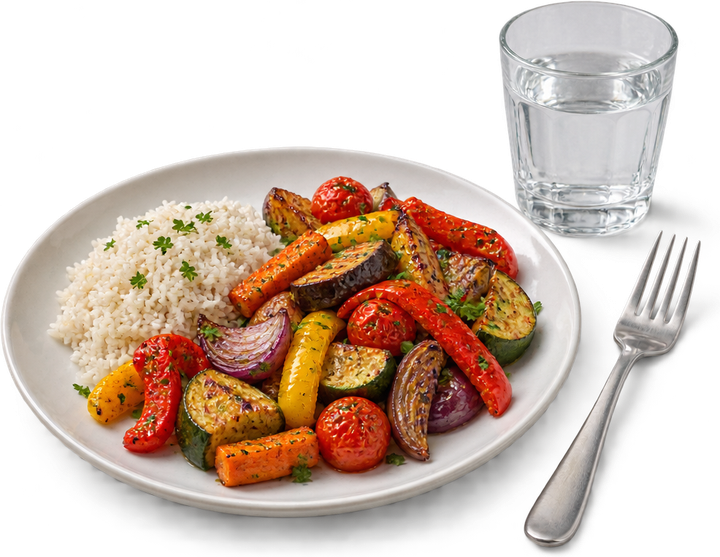
Eat together as a family as much as possible, with dishes close to everyone else’s: your child learns to eat by watching their brothers and sisters or by eating with you. Involve them in the shopping and cooking, vary flavours, textures and colours, and think of herbs, spices and vegetable stocks. A cupboard within their reach, filled with allowed foods, means they do not hear only about what is forbidden. Set limits as you would for any child, without overprotecting them, and never give them a forbidden food, even a small amount, as a treat.
Nursery, school and activities
Explain the diet to the people who look after your child, give them the list of forbidden foods and provide the amino acid mixture, the meals or the special foods. At school, agree in writing with the staff how the diet will be applied, and provide a meal that looks like the canteen menu so that your child eats with the others, under supervision. For a birthday, bring a cake or ingredients that all the children can share, and for residential school trips to the countryside or the snow, contact the head teacher, the cook and the class teacher in advance. All sports are possible, avoiding overly sustained effort in organic acidurias, and the amino acid mixture is still taken in full, ideally in 3 or 4 doses at meals that contain natural protein.
Weekends, holidays and travel
Prepare every trip: plan a sufficient stock of special foods and amino acid mixture, accommodation where you can cook simple meals, and agree on menus with the people hosting your child. Ask your team whether the destination is reasonable, find out where the nearest hospital is and always carry the emergency certificate, as well as, for maple syrup urine disease and organic acidurias, the emergency diets and products. For travel abroad, take a medical certificate stating that these special foods are for your child’s diet, to avoid being held up at customs. Few holidays without parents can manage the diet: ask your team or a parents’ association for advice.
When your child refuses to eat
A young child can go through phases of refusal without being ill: take the plate away without insisting or distracting them, with no dessert or replacement food: hunger will help them eat at the next meal. Both parents should keep the same attitude, and an amino acid mixture that is too large, too diluted or too thick can explain a lack of appetite or refusal: check this with your dietitian. The mixture remains essential every day, and if this moment becomes too difficult for you, the team’s psychologist can help. In maple syrup urine disease and organic acidurias, unusual refusal in a child who normally eats well can signal decompensation: contact your team.
Fever, vomiting, diarrhoea
In phenylketonuria, fever raises phenylalanine levels, which is not serious if it does not last: offer sweet foods that are easy to swallow, and the mixture in small amounts at regular intervals. If there is vomiting or diarrhoea, see your doctor to find the cause, and do not use anti-diarrhoea milk, which is often high in protein. In maple syrup urine disease and organic acidurias, these same situations can trigger decompensation: apply the plan set by your centre without delay and let them know. Do not prolong or repeat an emergency diet without the team’s advice.
When to call the medical team
Call your metabolic disease reference centre as soon as your child does not seem their usual self, especially with maple syrup urine disease or an organic aciduria. Warning signs are unusual drowsiness or agitation, clumsy movements, an unsteady walk, tremors, extreme tiredness, vomiting or refusal to eat or take the mixture. If impaired consciousness, vomiting or food refusal persist or worsen, go to hospital straight away, with your documents and emergency products. For any question, however simple, contact the team: regular contact helps them advise you better.
The other topics.
The basics
Protein and amino acids
What happens to a protein in the body, to better understand the diet.

Understanding the condition
Disorders of amino acid catabolism
An enzyme is missing: the body cannot break down certain amino acids normally.


The treatment
The principles of treatment
A diet specific to each condition, set by your medical team.
Childhood, adolescence, pregnancy
Phenylketonuria (PKU)
Your child’s diet, adolescence and pregnancy.

Risk situations
Maple syrup urine disease (MSUD)
A lifelong diet, the warning signs and what to do first.

Diet and monitoring
Organic acidurias
Diet, medication and monitoring, with your reference centre.

Intake set by the team
Chronic kidney disease
Less protein, enough energy: a diet built with your team.


Taranis know-how.
Since 1979, Taranis has been creating varied, enjoyable foods designed for everyday life despite the constraints of a restricted diet under medical supervision. Its research and development team creates reduced-protein recipes whose taste and texture come close to those of ordinary products, working with specialist hospital departments, prescribers and the people who follow the diet. The products are made to precise specifications, with checks at every stage of production, and most of them are foods for special medical purposes.
Reviewed by Steeve Roland, physiotherapist, over 20 years in clinical nutrition, founder of BSNUTRITION · Updated on
Publisher: BS NUTRITION SA, Rue de l’Industrie 20, 1400 Nivelles, Belgium. Legal notice